No Hook
Videos that begin without a distinct attention-grabbing hook.
View breakdownCreative breakdown
The clip uses alternating Vietnamese and Japanese subtitles for colloquial example sentences, presenting everyday language practice as the content of the Japanese conversation resource.
Try creating a similar video for freeView source on TikTokCreative breakdown
The clip uses alternating Vietnamese and Japanese subtitles for colloquial example sentences, presenting everyday language practice as the content of the Japanese conversation resource.
Videos that begin without a distinct attention-grabbing hook.
View breakdownThis perspective makes viewers feel as though they are experiencing it firsthand. Handheld selfie shots show product details and the usage process, creating an immersive sense of authenticity that brings viewers closer and sparks purchase interest.
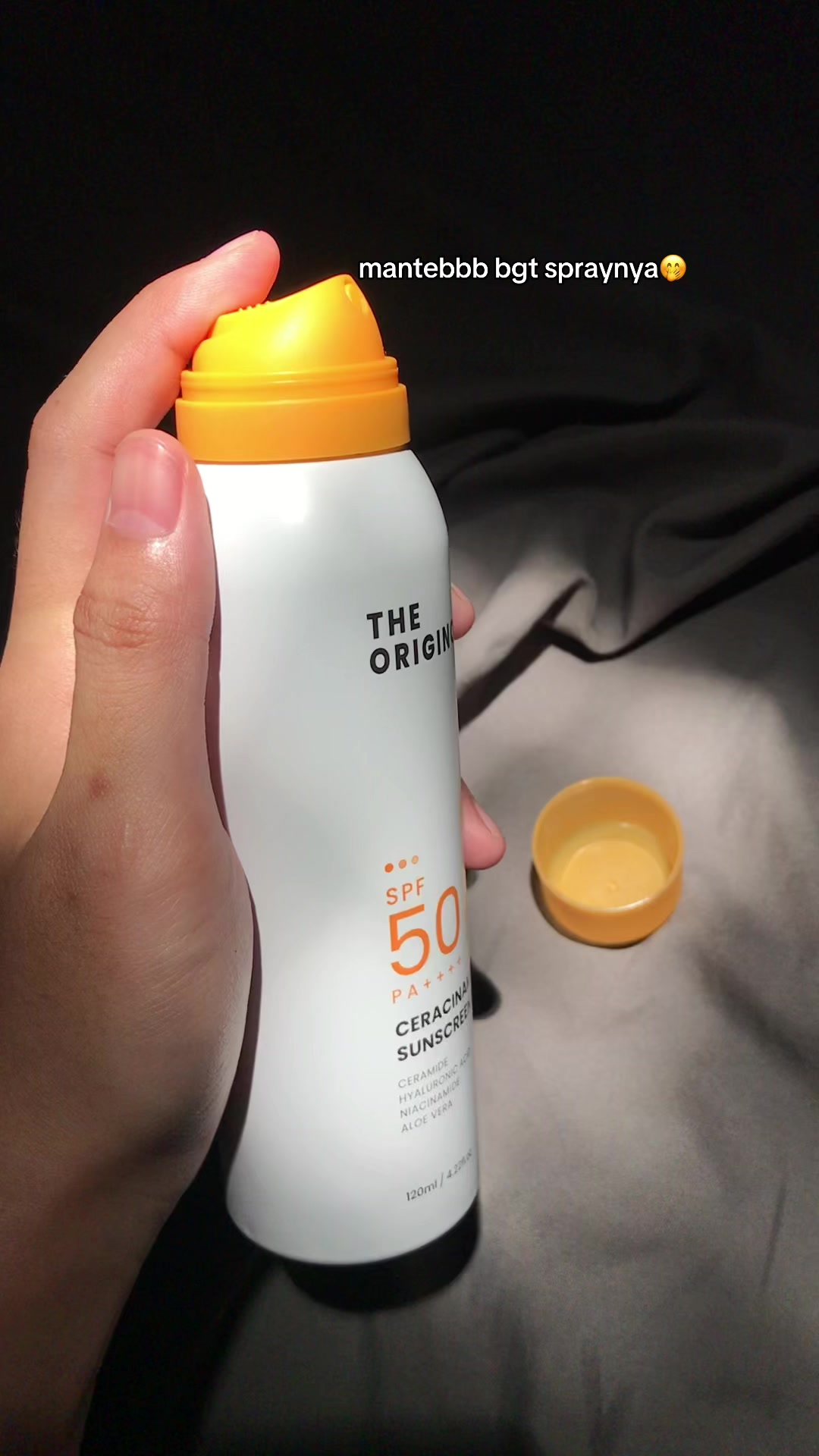
View breakdownVideos that present a product without a clearly defined selling angle.
View breakdownBut I don't know, datte shiranai mon. But I'm busy, datte isogashii nda mon. I don't want to go, ikitaku nai mon. It's true, hontou da mon. Why didn't you come? nande konakatta no. Because I didn't know back then, datte shiranakattan da mon.
Just now you heard me use several example sentences related to a specific grammar pattern. It sounds a bit coquettish and childlike. Therefore, this grammar pattern can only be used in intimate daily conversations, and we should avoid using it when talking to elders or in formal occasions.
It originally is the grammar form 'mono', and it transforms into 'mon' in colloquial speech. In Vietnamese, it roughly conveys the tone of 'it's just... y'know'. For example, we can say 'But I don't know, right?'. You just need to add 'mon' directly after the verb. Here 'datte' in this context translates to something like 'but you see'. Like saying 'But I'm busy, you know', when a friend asks you 'Wanna hang out?', you can reply 'But I'm super busy, datte isogashii nda mon'. I think this grammar pattern is really great and easy to use in daily conversations. Everyone can refer to it and practice these examples a lot. My books are placed on the lower left shelf.
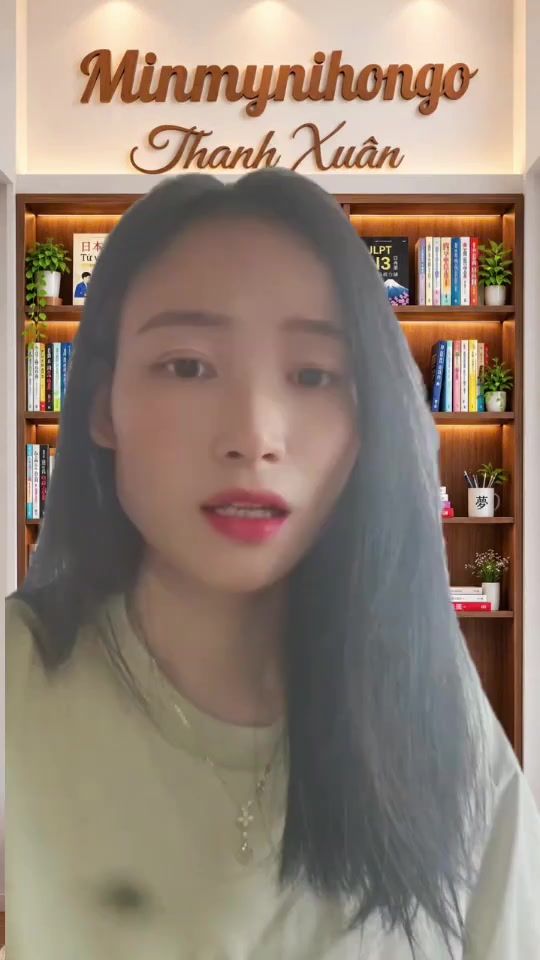
The woman faces the camera, demonstrating several Japanese colloquial example sentences with 'mon' in a conversational tone. Corresponding Vietnamese and Japanese subtitles appear at the bottom of the frame, with the background bookshelf clearly visible.
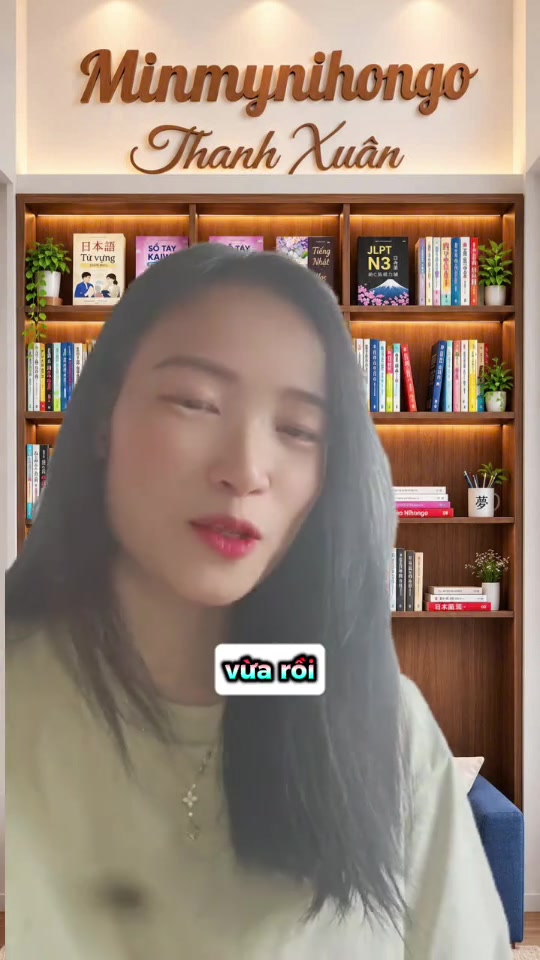
The woman gestures with her raised hand to explain the usage scenarios of this grammar point, clarifying that it is only suitable for intimate daily conversations and not for formal occasions. The background bookshelf and the blue sofa behind are fully in view.
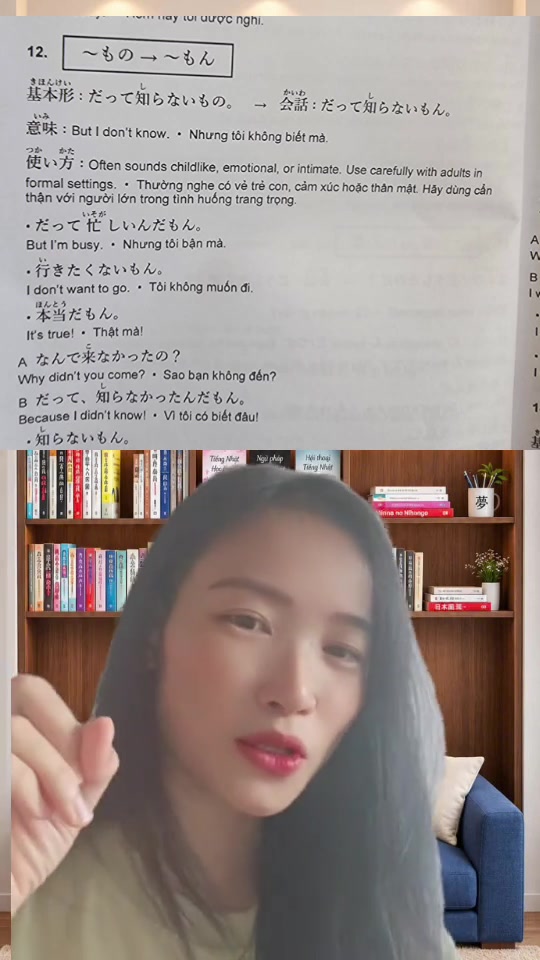
A PPT slide of Japanese grammar knowledge is overlaid at the top of the frame. The woman continues to explain the grammar transformation rules and practical application cases in depth, finally holding up a Japanese learning book for display. The shot ends with a full view of the empty bookshelf.
Frequently asked questions
Questions about this video’s creative strategy, creator, metrics, and creating a similar video.
This video uses a “No Hook” opening. The classification is based on the collected video content and available analysis fields, and can help explain how the first few seconds attract attention.
Its primary selling angle is “No clear selling angle” and its content structure is “First-person POV.” Use these as strategic references, then adapt the execution to your own product, audience, and brand voice.
The current dataset identifies MinMyNihonggo as the video creator. The creator name links to the corresponding public TikTok profile when available; account details may change over time.
Yes, you can use it as a creative reference. Octer extracts the hook, pacing, content structure, and presentation pattern, then combines them with your product information instead of directly copying the original footage.
No. The page shows the most recently collected public video and product data. Values may lag because of platform updates, reporting periods, or market changes, so treat them as research signals rather than real-time reporting.
Do not directly reuse the original creator’s footage, music, likeness, or brand assets. Confirm your rights to all product and generated assets, and follow TikTok Shop, advertising-market, and applicable local rules before publishing.